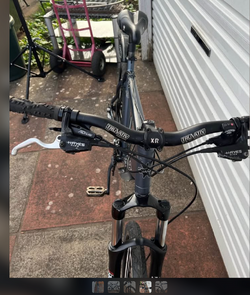
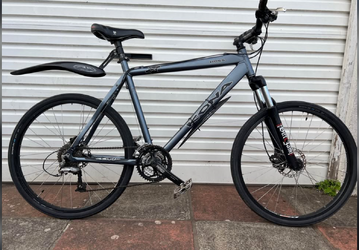
Is Kona Hoss still worth to buy? looking for advice as a big guy.

Page may contain affiliate links. Please see terms for details.

robertilles95

New Member
Hello everyone,
I am planning to buy a bike to enjoy Scotland's scenery. I would ride mostly away from busy roads, so would do lake rounds, woodlands at some point some casual ride hoping to get fit enough for some easy trails later on.
Im (193cm) 6'4 and 120kgs.
Looking to buy around 200-250gbp as a starter bike which can handle my weight. but its quite hard to find bikes in my size. I came across this Kona Hoss in my area. I saw its an older bike already. Would it still worth 180gbp? Or i should buy some newer? this is one of the XL frames is found. They say it has hydraulic brakes and its 3x9. I saw a Giant Roam 1 for 300 which is bit out of my budged, bit it was only L frame. Thank you in advance.
 

Attachments

  • Capture11.PNG
    Capture11.PNG
    1.1 MB · Views: 0
  • Capture22.PNG
    Capture22.PNG
    1.4 MB · Views: 0

midlandsgrimpeur

Senior Member
That does look well used. It is always tricky with such old bikes as it is hard to tell what made need to be spent on it parts and service wise.

I would say that the wheels look a bit basic and not the sturdiest. For a larger guy like yourself they make not be up to the task.
 
OP
OP
R

robertilles95

New Member
Thank you. Yes I thought so. I'll look around more. Cannondale trail 8,7,4 are around, maybe giant roamer 3 or wait for 1 to show up in XL. Giant tail too, Also there are trek Merlin 5 ,7 and some Cube bikes in this price point.
 

Jameshow

Guru
That does look well used. It is always tricky with such old bikes as it is hard to tell what made need to be spent on it parts and service wise.

I would say that the wheels look a bit basic and not the sturdiest. For a larger guy like yourself they make not be up to the task.

I think all MTB will have basic wheels.
I've seen bikes with rusty forks for £150... Cube behind others!

If the gears /brakes are working and still got life (chainrings should be flat topped not shark fins!)

IMG-20250501-WA0002.jpeg
 
OP
OP
R

robertilles95

New Member
I realise its a late reply to the thread but I don't think 120kg is a big ask for a modern bike. Yes some have weight limits below that, Decathlon springs to mind for bikes with the lowest weight limits commonly sold but many of the US brands and other brands go up to 300lbs or 136kg. One of the best bikes for heavier riders is the Carrera Subway at Halfords, its basically configured as a hardtail mountain bike but the front shocks are replaced with rigid steel forks. That is a real workhorse and very strong. Also low maintenance and reasonably efficient riding as no heavy front suspension forks. Aluminium fatigues over time so while the Hoss might have been strong when sold it could be getting close to breaking now. Steel frames can stay strong for long periods as long as deep corrosion hasn't set in but aluminium gets weaker with every ride pretty much. The more it is allowed to flex the faster the fatigue. The Kona Hoss was/is a strong bike but I feel the Saracens of the same age were equally strong and if anything more overbuilt in some areas. I remember my Saracen Xile feeling stronger and heavier than the Hoss bike I had at the same time.

04ed5166453baf2af1aa547726c2
 

froze

Veteran
There are several good bikes for large guys, most of which depends on how much you want to spend. Mongoose has several options that are suitable for up to 300 pound riders, those bikes are on the lower scale for pricing; Trek has the 1120 Off-road Bikepackers Touring bike that can also hold 300 pounds.

One common denominator in these bikes is that the more weight the bike can handle, the more the bike weighs. For example, the Outroad Fat Tire Mountain Bike can hold up to 440 pounds, but the bike weighs 55 pounds.

The other thing is that most bikes rate their weight carrying capacity based on how much weight the wheels can handle, not the frame, the frame can handle much more than the wheels can. So you could buy a pair of 40 or 48 spoke wheels for your current bike and be fine if you want to go the cheapest route; you could have a 48 spoke wheel for the back and a 40 for the front. On my touring bike I have 36 spoke wheel on the back and 32 on the front, that combination works great because most of the weight on any bike is on the rear.
 

Jameshow

Guru
There are several good bikes for large guys, most of which depends on how much you want to spend. Mongoose has several options that are suitable for up to 300 pound riders, those bikes are on the lower scale for pricing; Trek has the 1120 Off-road Bikepackers Touring bike that can also hold 300 pounds.

One common denominator in these bikes is that the more weight the bike can handle, the more the bike weighs. For example, the Outroad Fat Tire Mountain Bike can hold up to 440 pounds, but the bike weighs 55 pounds.

The other thing is that most bikes rate their weight carrying capacity based on how much weight the wheels can handle, not the frame, the frame can handle much more than the wheels can. So you could buy a pair of 40 or 48 spoke wheels for your current bike and be fine if you want to go the cheapest route; you could have a 48 spoke wheel for the back and a 40 for the front. On my touring bike I have 36 spoke wheel on the back and 32 on the front, that combination works great because most of the weight on any bike is on the rear.

Also that the wheels are properly tensioned so that the load is taken by all the spokes and not just a few. When a wheel pringles the load is taken by a fewer and fewer spokes and the fails...
 
Last edited:

froze

Veteran
Not necessarily, a lot of modern aluminum rims used on bikes intended for use as a touring bike are coming with just 32 spokes, and those rims are cracking at the spoke holes after just a few thousand miles, this also occurs with carbon fiber wheels on normal bikes.

Granted, cracks are usually associated with impact damage, poor manufacturing process and defects, but the less spokes there are the greater chance of cracks happening, and as the weight being carried goes up and spoke count goes down the risk multiplies.

Touring bikes today are being sold to make money for the manufacture, and they install cheap 32 spoke rims, if you use the bike for the way it was intended to be used, meaning touring with a load, those wheels will not last long, especially the rear wheel, you might get 4,000 miles before needing a new wheel. The construction of the rim means nothing, you need to have more spokes to spread the load out more across the rim.

I know about this first hand, and spoke to my bike mechanic about it, and read a lot about it on the internet. I have a 2023 Masi Giramondo 700 that came with 32 spoke rims that when I questioned the wisdom of using 32 spokes for a touring bike with the manufacture rep, he told me that the rim due to the way it is built will handle touring loads with no problems...2,000 miles later the rim had about dozen cracks at the holes, about 6 on one side and about 6 on the opposite side. I took the bike to a shop in town where I know the mechanic, and he said the rim failed due to too much load on the rim, and it was evident with the cracks being on opposing sides. This is a wheel set that was checked regularly by the bike shop to make sure the spokes were adjusted correctly and stayed adjusted, and they were assembled correctly from the factory. I might have been able to get a manufacture warranty on those wheels, but I would have had the same problem later, so I said screw it and bought a better back wheel.

The bike shop got me an Alex DC19 rim with 36 spokes instead of 32, and so far after 4,000 miles no cracks, and that rim is not an expensive rim, just like the Masi Brev M rim was not either, but that Alex rim is highly popular in the touring circles. I also threw out the rear Brev M hub and got a Shimano XT instead, can't really tell the difference in the way it rolls, but it is made a lot better than the Brev M and should last a very long time.

Even my bike mechanic said, including his own touring bike, that the wheels from the factory are trash, his cracked about the same mileage as mine did, except he replaced both wheels, I just replace the rear, the wheels look so similar no one would be able to discern a difference without getting real close. The front Brev M wheel I'm hoping should be fine for a long time, but I will have to keep a close eye on it for cracking, but I have a feeling the hub will fail before the rim.

Keep in mind that I'm running about 60 pounds of gear, food and water, along with 173 pounds of body weight that's 333 pounds being put onto my wheels, with the rear responsible for carrying about 70% of the weight.

 

chris667

Legendary Member
120kg is no problem at all, and I don't really think aluminium fatigue is something to worry about. Maybe an aluminium frame will fail after a lot of service, but it won't turn brittle from lack of use. There's no reason to buy a bike which isn't in good condition and it seems you can't give bikes like a Kona Hoss away these days.

You might have issues with a suspension fork of that age that hasn't been used - I would say a rigid steel fork would be better. Dawes made a bike called the Sardar Flatbar while I was not paying attention - having seen one of these in the flesh I reckon it would be a perfect bike for a bigger person.

Wheels are the thing that will fail you most often if you weigh a lot. My "nice" bike has Rigida Sputniks, 36 hole, built onto a Deore LX rim. Thicker spokes on the drive side, and they were handbuilt. It costs more to get a handbuilt wheel, but it will last you - provided it's made well enough, you won't need to true your wheel or replace spokes unless you have an accident or something wears out. I don't think you can get Sputniks now, but Rigida makes the Andra which is a stronger rim. Don't go too skinny with tyres - 26 x 1.75 is a good width for a "slick" tyre for road use on an MTB. Knobbly tyres will give you a better workout on tarmac or a cycle path, but if you're riding to get anywhere you'll find slicks better. For use on mud, knobblies of course.

Then, you have to make sure the contact points (pedal, sadlle and handlebars) are in the right place. If it is uncomfortable, you won't use it.
 

froze

Veteran
Who said that aluminum would turn brittle from lack of use?

Then you said: "I don't really think aluminium fatigue is something to worry about." Actually it is something to worry about, aluminum does fatigue, it's a well known FACT. That's why, as you said in your second to last paragraph, that "Wheels are the thing that will fail you most often if you weigh a lot"...why is that happening? FATIGUE!
 

chris667

Legendary Member
Then you said: "I don't really think aluminium fatigue is something to worry about." Actually it is something to worry about, aluminum does fatigue, it's a well known FACT. That's why, as you said in your second to last paragraph, that "Wheels are the thing that will fail you most often if you weigh a lot"...why is that happening? FATIGUE!

A rather pedantic reply. Still.

To clarify my point, aluminium fatigue Is not something to worry about with a frame, provided it is in good condition. If it was a superlight racing bike then maybe not, but the Hoss isn't one of those. The Hoss is massively overbuilt.
 
Last edited:
A rather pedantic reply. Still.

To clarify my point, aluminium fatigue Is not something to worry about with a frame, provided it is in good condition. If it was a superlight racing bike then maybe not, but the Hoss isn't one of those. The Hoss is massively overbuilt.

I personally don't think the Kona Hoss was massively overbuilt but definitely overbuilt but have seen stronger hardtails. However its getting on a bit now. It seems ages ago the Kona Hoss was sold new and such bikes would have been abused with very high weight riders typically surely as a secondhand purchase. I'm not convinced a very old Kona Hoss frame would be as strong as a new hardtail mountain bike frame that is a little overbuilt or a steel frame. It used to be that Halford's bikes like the Carrera models were very strong, stronger than the other brands in their range like the Boardman and Voodoo. They did some hardtail mountain bikes with frame reinforcing and had a weight limit of 120kg per rider or 160kg total weight limit that mustn't be exceeded. Halfords bikes despite having a huge percentage of the UK market have had an extremely low amount of recalls. They are typically stronger than many other brands offering both high weight limits and long frame warranties compared to many other brands which have lower weight limits and shorter frame warranties. Yes they might be a smidgen heavier than some other bikes but surely a good thing for heavier riders. I've often been surprised how much better Halford's mountain bike frames are compared to other more expensive brands and when I say better I mean extra reinforcing, thicker stays etc. It's clear they are often coming out of the same factories as other importer brands but they seem to choose stronger configurations.

Halfords bikes have always felt to me the best re-introduction to cycling if you are a heavier rider looking to lose weight. I remember at one point Decathlon had mountain bikes with a total load of only 100kg, weak frames, low spoke wheels etc and when you take the bike weight out of the equation you are only left with about 82kg maximum rider weight. I also remember the huge Rockrider recall where the larger frames were failing, one example was after just 2 weeks of use. They hadn't put any extra reinforcing into the frame for taller, heavier riders I guess because of their obsession of providing low weight bikes at a low price point. Great for lightweight riders but rubbish and dare I say it dangerous for heavier riders. Decathlon have had loads of recalls across all sort of bike types although I guess their step thru models were the most dangerous.
 

chris667

Legendary Member
I personally don't think the Kona Hoss was massively overbuilt but definitely overbuilt but have seen stronger hardtails.
Bikes designed for different disciplines of riding need a different design. The Saracen Xile you mentioned above was a dirt jump bike. It was marketed at kids who wanted to spend hours jumping off unsuitable things. Of course it would be stronger than a bike designed for cross country. I am surprised that someone who obviously spends so much time thinking about bikes hasn't considered this.

The Hoss was supposed to be an XC bike for heavier riders - see the Wayback Machine description of it from Kona's website here. A stronger frame than an XC bike (look at those massive square tubes!) and a much more forgiving riding position than any of its contemporaries. A heavy rider could well have damaged a lighter XC frame, and they would likely have found it uncomfortable in any case.

There will be plenty of examples of unused bikes out there - the road to hell is paved with good intentions. If OP can find one, a Hoss will be a good choice with the parts that were specified by the manufacturer - it was designed for a heavier rider who probably has less bike fitness. It's much more upright than an XC bike from the same period.

As to weight limits on modern MTBs - I strongly suspect the figure is pretty arbitrary, specified by the warranty department as much as design. You just don't hear of big people breaking mid-range bike frames very often - superlight stuff maybe, but that's not what we're discussing here.

Wheels fail, in the most part. This is because they're not usually not specced properly, and built by machine. Partly it's rider weight and distribution between front and back wheels, partly because inexperienced riders don't learn to unweight themselves over the bike when they go over potholes. In either case, this can be mitigated by choosing appropriate components. 36 spokes on the rear wheel, stronger spokes on the cassette side and stress relief and retensioning before the bike gets ridden on.
 
Top Bottom