- Location
- Inside my skull
That's amazing! It's even changed the shape of the tap!
Put it on an old steel bike frame and a new lightweight aero carbon frame comes out the process.

That's amazing! It's even changed the shape of the tap!
I think all acids will attack the metal to an extent - it's just a case of how long this takes based on how strong they are; and hence how much margin of error you have before it becomes problematic.Oxalic acid doesnt harm the good metal -or paint - in the slightest.
I'm not sure - if you're removing the rust I think you want as robust-a-finish as possible; i.e. a decent paint but this brings us back to the practical issues of prep and application in my last post. I think really it needs to be one of two extremes - remove all corrosion and fully refinish the frame (or at least the affected area) to a high standard (which has always been difficult; probably harder still now with environmental regs on consumer paints) or impregnate the rust with something that's going to stop it getting worse.Would that be good as a post-acid treatment? And presumably for the less serious frame rust elsewhere. I'd prefer the least aggressive route that will actually work. Would this survive the daily rough 'n tumble, or might it just wash off? In which case, I don't know, some kind of varnish? Any thoughts appreciated.


And spraying WD-40 into all the tubing sounds like a really good idea.

Would this be any good?
https://ebay.io/m/oCb3Ge

Not nowadays, vegetable oils have been found to turn acidic and attack the metal they were supposed to preserve.I hear boiled linseed oil is favoured for "sympathetic" protection but I've not tried it.
Im a physics man rather than a chemistry type geezer, but my limited understanding is that oxalic acid chemically reacts with oxides, so clean metal is left alone. Certainly in my personal experience it has never visibly etched clean steel or caused even the slightest visible damage to paint.

Not nowadays, vegetable oils have been found to turn acidic and attack the metal they were supposed to preserve.
Tannic acid, found in various proprietary products (no need to brew up), well washed off, followed by Renaissance wax is the museum standard.

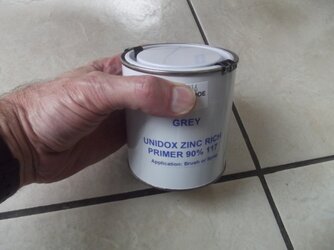
I can recommend this zinc primer I bought a few years ago. When the seller handed it to me he continued to hold on to the can...... It then became clear why he did this IT'S VERY HEAVY for a small tin of paint. Customers drop them if he doesn't do this
The zinc content is very high. Before use it takes about 10 minutes of constant stirring with a heavy-duty stirrer (I use a stainless steel strip) to get a good even consistency

I love things like that. It always hacks me off in movies when you see the gang loading the gold bullion into the back of the van, like they're handling house bricks, when a standard bullion bar weighs twelve and half kilos - getting on for the weight of a 12-bottle box of wine. Gold is also VERY HEAVY!
I won't be getting any zinc primer tho. Again, though it would probably be part of an 'ideal' solution, I think it would be a bit OTT for my needs, which are basically to stop the existing rust in its tracks, and discourage new rust. And I think I'm just about there....
View attachment 816448
Rust removed, remaining traces 'converted' (whatever that amounts to), and the whole shebang coated with (you're going to love this!) clear nail varnish. Why not? It seals. I'd have used regular varnish if I'd had any to hand, but I don't see why nail varnish shouldn't do the job just as well. Google says it'll need re-applying in a few months. Fine. I can re-apply now & again. And it's not like it's going to be exposed to any impact damage, being tucked away under the seat like that. So I think I'm good now. Looks a bit of a shocker, but down here in that there London we call that scrote-proofing. So far so good!
Thanks all.